Significant weight loss changes far more than a number on a scale. It can reveal a stronger silhouette while leaving loose skin, loss of volume, and areas that no longer reflect the effort behind the transformation. The best procedures after weight loss are not chosen from a menu. They are selected through a precise assessment of skin quality, anatomy, goals, and the amount of correction required to create a refined, balanced result.
For patients who have reached a stable weight, post-weight-loss surgery can be the final, highly personal stage of their transformation. It is a decision that deserves the same discipline and planning that made the weight-loss journey possible.
When Is the Right Time for Post-Weight-Loss Surgery?
A stable weight is the foundation of good planning. In most cases, patients should maintain their target weight for several months before pursuing body contouring. Continued fluctuations can compromise the longevity of the result, while nutritional deficiencies may affect healing.
Your surgeon will also consider the cause and pace of weight loss, whether bariatric surgery was involved, your medical history, medication use, smoking status, and the quality of your skin. This is not merely a cosmetic conversation. It is a surgical plan built around safety, recovery capacity, and the proportions you want to preserve.
Patients often arrive focused on one area, such as the abdomen or breasts. That concern may be valid, but the most elegant outcome usually comes from evaluating the body as a whole. A flatter abdomen, for example, may make breast volume loss or arm laxity more noticeable. Strategic sequencing can prevent an isolated procedure from feeling visually incomplete.
The Best Procedures After Weight Loss, by Concern
Abdominoplasty for loose abdominal skin
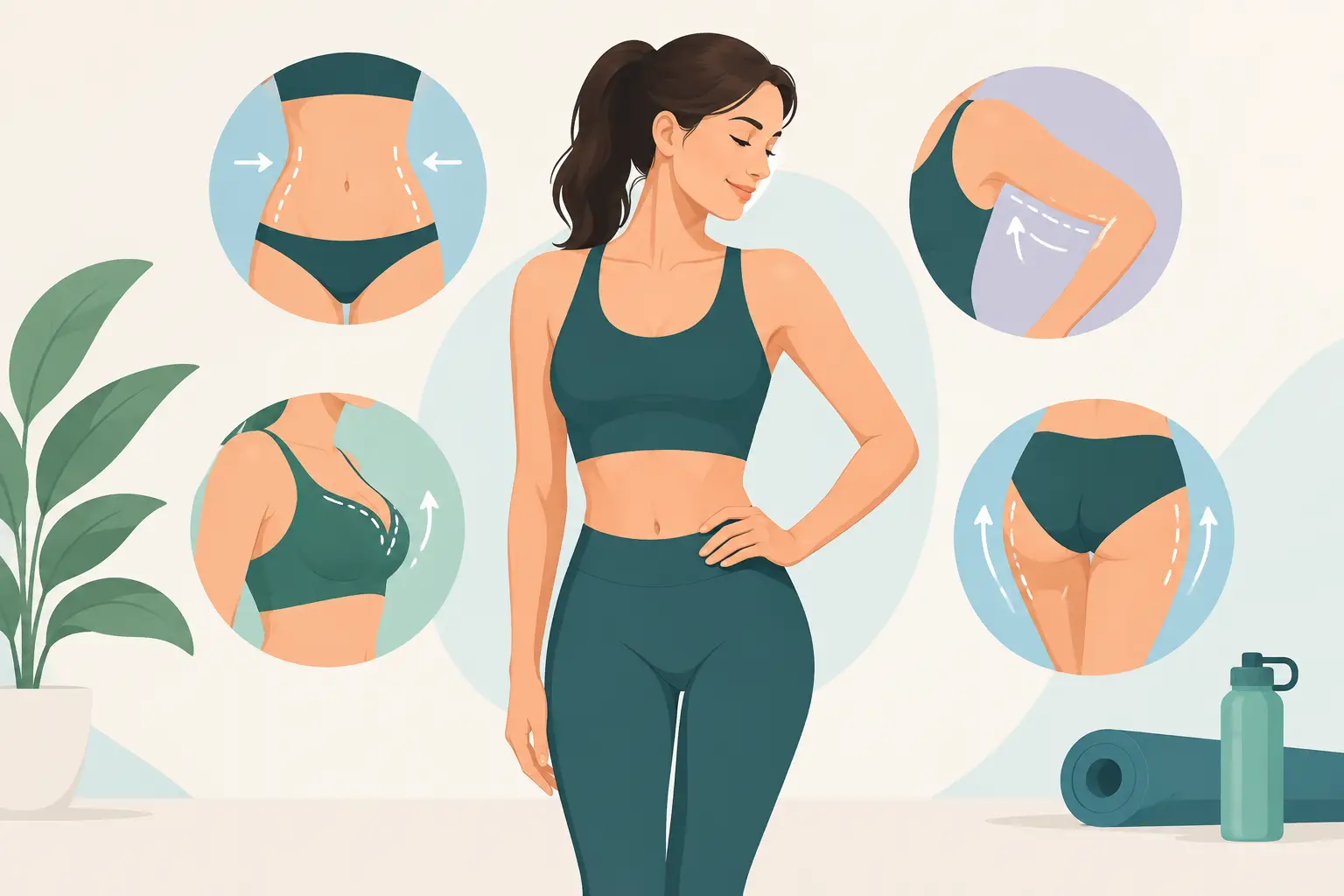
The abdomen is one of the most common concerns after major weight loss. Excess skin may fold over the lower abdomen, create irritation, make clothing difficult to fit, or obscure the waistline achieved through weight reduction. An abdominoplasty, commonly known as a tummy tuck, removes excess lower abdominal skin and can repair separated abdominal muscles when indicated.
For patients with more extensive skin laxity, an extended tummy tuck or lower body lift may be more appropriate. These procedures address excess tissue beyond the front of the abdomen, often improving the waist, flanks, outer thighs, and lower back. The right choice depends on where the skin excess sits, not simply on how much skin is present.
Liposuction may be incorporated to refine contour in selected areas, but it is not a substitute for skin removal. When skin has lost elasticity, removing fat alone can make laxity more apparent. This distinction is central to sophisticated body contouring.
Breast lift and breast augmentation for shape and volume
Weight loss frequently changes the breasts through volume reduction, skin stretching, and descent of the nipple position. A breast lift, or mastopexy, reshapes the breast envelope and repositions the breast tissue for a more youthful contour. For many patients, that is the essential procedure.
Others want to restore upper-pole fullness or a fuller breast profile. In those cases, a breast lift may be combined with implants or, for appropriate candidates, fat transfer. Each option involves a different aesthetic trade-off. Implants can create more predictable volume and projection, while fat transfer offers a softer, more subtle enhancement but is limited by available donor fat and variable retention.
The best approach is not necessarily the most dramatic one. It is the one that respects your frame, skin quality, desired cleavage, lifestyle, and long-term preferences.
Arm lift for excess upper-arm skin
After substantial weight loss, the upper arms can retain loose skin that does not respond to exercise. An arm lift, or brachioplasty, removes this excess tissue and creates a more defined arm contour. The incision is a meaningful consideration and should be discussed openly. A longer scar may be necessary to correct more significant laxity, particularly when it extends toward the chest.
For the right patient, the improvement in clothing fit and confidence in sleeveless styles can outweigh the scar trade-off. Premium surgical care means having a direct, realistic conversation about that balance before a decision is made.
Thigh lift for persistent skin laxity
The inner thighs are another area where skin redundancy can lead to friction, discomfort, and dissatisfaction with body proportions. A thigh lift can tighten the inner thigh contour, with the incision pattern tailored to the location and severity of loose skin.
A limited inner thigh lift may be enough when laxity is concentrated near the groin. More extensive laxity may require a vertical incision. As with an arm lift, the procedure is not about promising invisible scars. It is about placing scars thoughtfully while delivering a meaningful improvement in shape and comfort.
Body lift for comprehensive contour restoration
A lower body lift is often considered after massive weight loss when excess skin affects the abdomen, hips, buttocks, and outer thighs together. It is one of the most comprehensive contouring procedures and can dramatically improve the relationship between the waist, buttocks, and lower torso.
Because it is a more involved operation, it requires careful patient selection and a thoughtful recovery plan. Some patients benefit from staging procedures instead of combining every concern into a single surgery. Staging can reduce operative time, simplify recovery, and allow the surgeon to refine each area with greater focus. The best sequence is individual, not standardized.
Facial Rejuvenation After Weight Loss
Weight loss can bring beautiful definition to the face, but it may also reveal volume loss around the cheeks, temples, jawline, and neck. In patients with skin laxity, a facelift and neck lift can restore a cleaner facial contour without creating an overdone appearance.
For patients whose main issue is volume depletion rather than excess skin, fat transfer or selected injectable treatments may be considered. A facial plan should be conservative and anatomy-led. The goal is not to erase every sign of maturity, but to restore balance, vitality, and a rested appearance that still feels unmistakably yours.
Combining Procedures: When More Is Not Better
Combining procedures can be efficient, reducing the number of anesthetics and consolidating recovery time. A breast lift with abdominoplasty, for example, may be appropriate for a healthy patient with a clear surgical plan. However, a longer operation is not automatically a better operation.
Safety determines what should be performed together. Factors such as procedure length, blood-loss risk, body mass index, medical conditions, healing history, and postoperative support all matter. A surgeon’s willingness to recommend staged treatment when necessary is a sign of clinical judgment, not a limitation.
International patients should also plan for adequate time near their surgical team before returning home. Travel should never be scheduled around convenience alone. Follow-up, mobility, compression garments, wound care, and clearance to fly need to be integrated into the itinerary from the outset.
Choosing a Surgeon and Hospital Setting
Post-weight-loss body contouring is among the most technically demanding areas of aesthetic plastic surgery. The right surgeon must understand scar placement, tissue handling, contour transitions, and how to manage the increased complexity that can follow major weight change.
Ask direct questions during consultation: What procedure best addresses my anatomy? What scar should I expect? Should my treatment be staged? What does recovery look like in the first weeks? How will complications, if they occur, be managed? Clear answers and a realistic plan are more valuable than a promise of perfection.
At Dr. Hebert Lamblet American Hospitals, Brazilian expertise is paired with a high-standard hospital environment in Tirana, Albania, offering international patients a considered path to body contouring under European standards of care. The experience should feel coordinated from consultation through postoperative follow-up, with clinical safety remaining the priority at every stage.
A successful post-weight-loss result is not defined by removing the most skin or performing the greatest number of procedures. It is defined by proportion, comfort, scar quality, and a result that supports the life you worked hard to build. Schedule a personalized consultation when your weight is stable and your goals are clear, then give the planning process the care it deserves.