A single breast augmentation before and after example can be compelling, but the most valuable images do more than show a larger cup size. They show how carefully selected volume, implant profile, incision planning, and surgical technique can refine the silhouette while preserving harmony with the patient’s frame. For patients considering surgery abroad, the question is not simply, “How much bigger?” It is, “Will this result look considered, balanced, and distinctly mine?”
At Dr. Hebert Lamblet American Hospitals, breast augmentation is approached as a highly individualized aesthetic decision, performed within a premium hospital environment in Tirana. Brazilian expertise, European standards, and a disciplined surgical assessment come together to create results designed around proportion rather than trends.
What a Breast Augmentation Before and After Example Should Show
The strongest before-and-after examples are photographed consistently: similar posture, lighting, distance, and arm position. This matters because a raised shoulder, different bra line, or altered camera angle can make the breasts appear fuller or more symmetrical than they are. Credible clinical photography allows the actual changes in shape, position, and proportion to be assessed with clarity.
Beyond volume, look at the relationship between the breasts and the rest of the torso. A refined result may enhance upper-pole fullness, restore volume lost after pregnancy or weight changes, or create a more projected profile under clothing. It should also respect the width of the chest, the quality of the skin, the existing breast tissue, and the position of the nipple-areola complex.
A beautiful result is not defined by a universal look. For one patient, it may mean a subtle, athletic contour. For another, it may mean more visible fullness and a sculpted décolletage. The right outcome depends on anatomy, lifestyle, and the patient’s aesthetic preferences.
Reading Before-and-After Results With a Clinical Eye
Before-and-after galleries are most useful when viewed as examples of surgical judgment, not promises of duplication. No two chests, skin envelopes, or healing responses are identical. An implant that looks elegant on a patient with a broad chest may appear disproportionately prominent on someone with a narrower frame.
Volume Is Only One Part of the Result
Many patients focus first on implant volume measured in cubic centimeters. While this number is relevant, it does not translate directly into cup size or visual impact. The same implant volume can look markedly different depending on the patient’s starting breast volume, chest width, soft-tissue thickness, and implant profile.
A moderate-profile implant may create a soft, naturally projected appearance on one body type. A higher-profile option can produce more forward projection with a narrower base. Neither choice is inherently superior. The surgical objective is to select dimensions that fit the patient’s anatomy and desired aesthetic, rather than choosing volume in isolation.
Symmetry Should Look Improved, Not Artificial
Natural breasts are rarely perfectly symmetrical. One may sit slightly lower, have a different base width, or show a small variation in volume. A thoughtful augmentation can improve visible asymmetry, but patients should be cautious of galleries that suggest surgery can create geometric perfection.
A skilled surgeon identifies these differences before surgery and explains how they may influence implant selection, pocket adjustment, or incision planning. In some cases, slightly different implant sizes may be considered. In others, the most sophisticated choice is acknowledging a minor asymmetry that remains normal and attractive.
The Breast Position Matters as Much as Fullness
An augmentation adds volume. It does not automatically correct significant skin laxity or a low nipple position. If the breast tissue has descended substantially after pregnancy, breastfeeding, aging, or major weight loss, implants alone can add fullness without fully addressing the underlying ptosis.
In those cases, a breast lift, or mastopexy, may be recommended with or without implants. This involves additional scars and a more involved recovery, but it may offer a more elevated, long-lasting shape when lift is genuinely needed. A responsible consultation distinguishes between a patient who needs volume and a patient who needs reshaping, rather than presenting one operation as the answer to every concern.
Why Timing Changes Every Before-and-After Image
A breast augmentation result evolves significantly during recovery. Images taken too early may show high-riding implants, swelling, tightness, or temporary changes in nipple sensation. These are not necessarily signs of a poor result. They can be part of the normal healing process as the tissues adapt.
During the first weeks, the breasts may look fuller and sit higher than the final position. Over the following months, swelling resolves and the implants settle into a more natural relationship with the chest. The precise timeline varies by implant placement, tissue characteristics, activity level, and individual healing.
When reviewing a breast augmentation before and after example, ask when the after photograph was taken. Images at three months can be useful, but images at six months or later often offer a more mature view of shape, scar quality, and implant settling. Scar maturation can continue well beyond that point.
Implant Placement and the Look of the Upper Breast
Placement is another decision that influences what appears in a final photograph. Implants may be positioned above or below the pectoral muscle, with the choice guided by anatomy, available soft-tissue coverage, athletic activity, and aesthetic goals.
Placement beneath or partially beneath the muscle may provide additional implant coverage for patients with limited natural breast tissue. Above-muscle placement can be appropriate for selected candidates and may avoid muscle-related movement during chest exercises. Each approach has benefits and trade-offs, including recovery experience, animation deformity risk, and how the implant may be perceived over time.
This is why consultation matters more than copying an image. The same result cannot be responsibly prescribed without examining the patient’s tissue, chest wall, posture, and long-term goals.
Questions Worth Asking During a Consultation
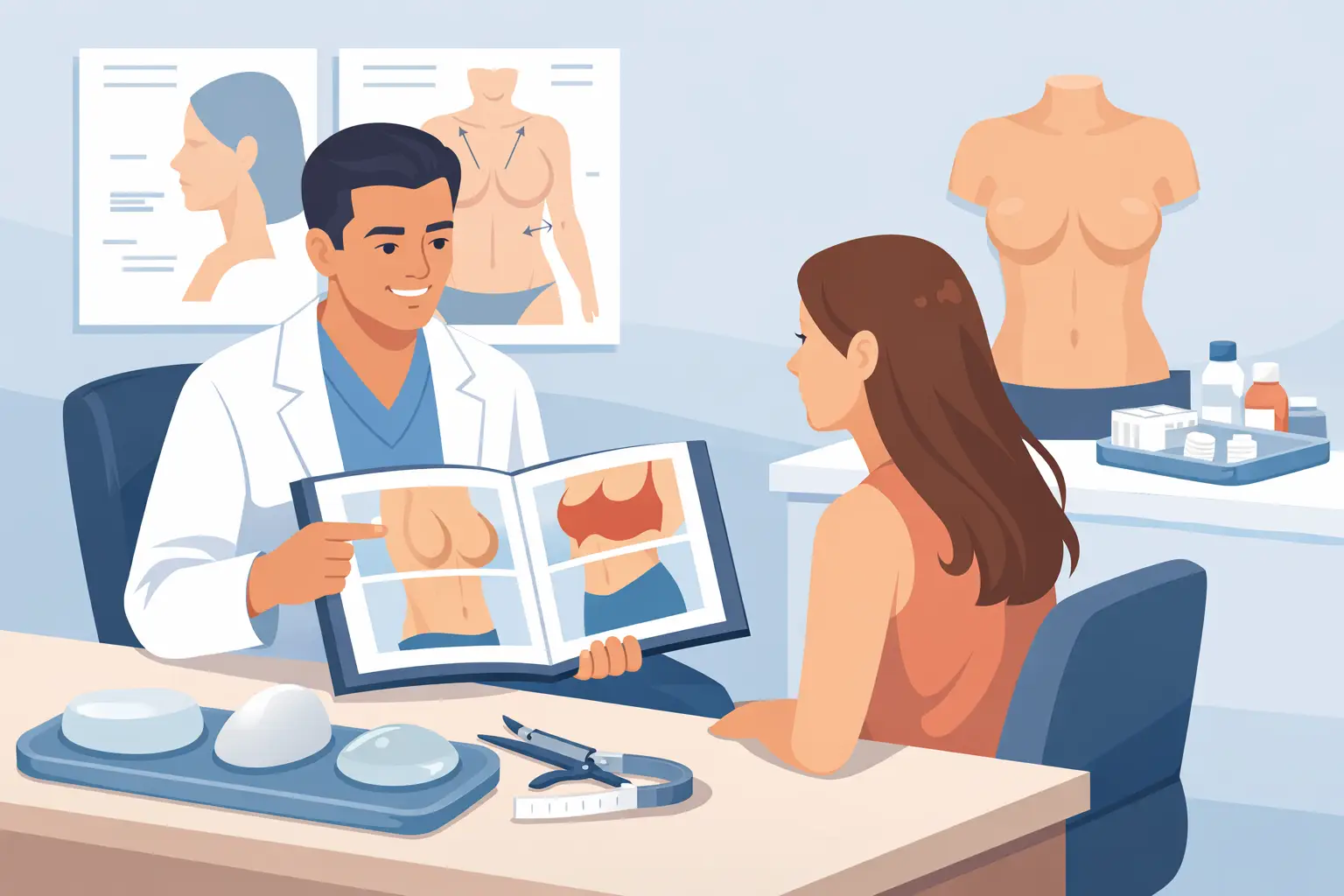
A premium surgical consultation should make the decision clearer, not more confusing. Patients should expect a discussion of their desired look, medical history, breast measurements, skin elasticity, and future plans such as pregnancy or substantial weight change.
It is also reasonable to ask to see examples of patients with a similar body type or starting point, while understanding that these are reference cases rather than guarantees. Discuss the type and dimensions of implants being considered, the likely incision location, placement plane, expected recovery, and whether a lift may better serve the desired outcome.
For international patients, planning must extend beyond the operating room. The duration of the stay, post-operative assessments, support during early recovery, and timing of travel home should be organized with the same precision as the surgery itself. A world-class experience depends on continuity of care, not just the procedure day.
Choosing Results That Age Well
The most enduring breast augmentation results tend to be those that respect the patient’s natural proportions. Very large implants can be appropriate for some individuals, but they may place more weight on the tissues and can create different long-term considerations. More modest dimensions may offer a refined result with less strain on the skin envelope, though the preferred balance remains personal.
Patients should also understand that breast augmentation does not stop natural aging. Skin changes, pregnancy, weight fluctuation, and gravity continue to affect the breasts over time. Implants are not considered lifetime devices, and future monitoring or revision surgery may eventually be necessary.
The goal is not to chase a photograph. It is to make an informed choice with a surgeon who can translate an aesthetic preference into a plan that is medically appropriate, proportionally elegant, and aligned with the life you plan to live after surgery. The best before-and-after example is ultimately the one that helps you ask better questions about your own result.