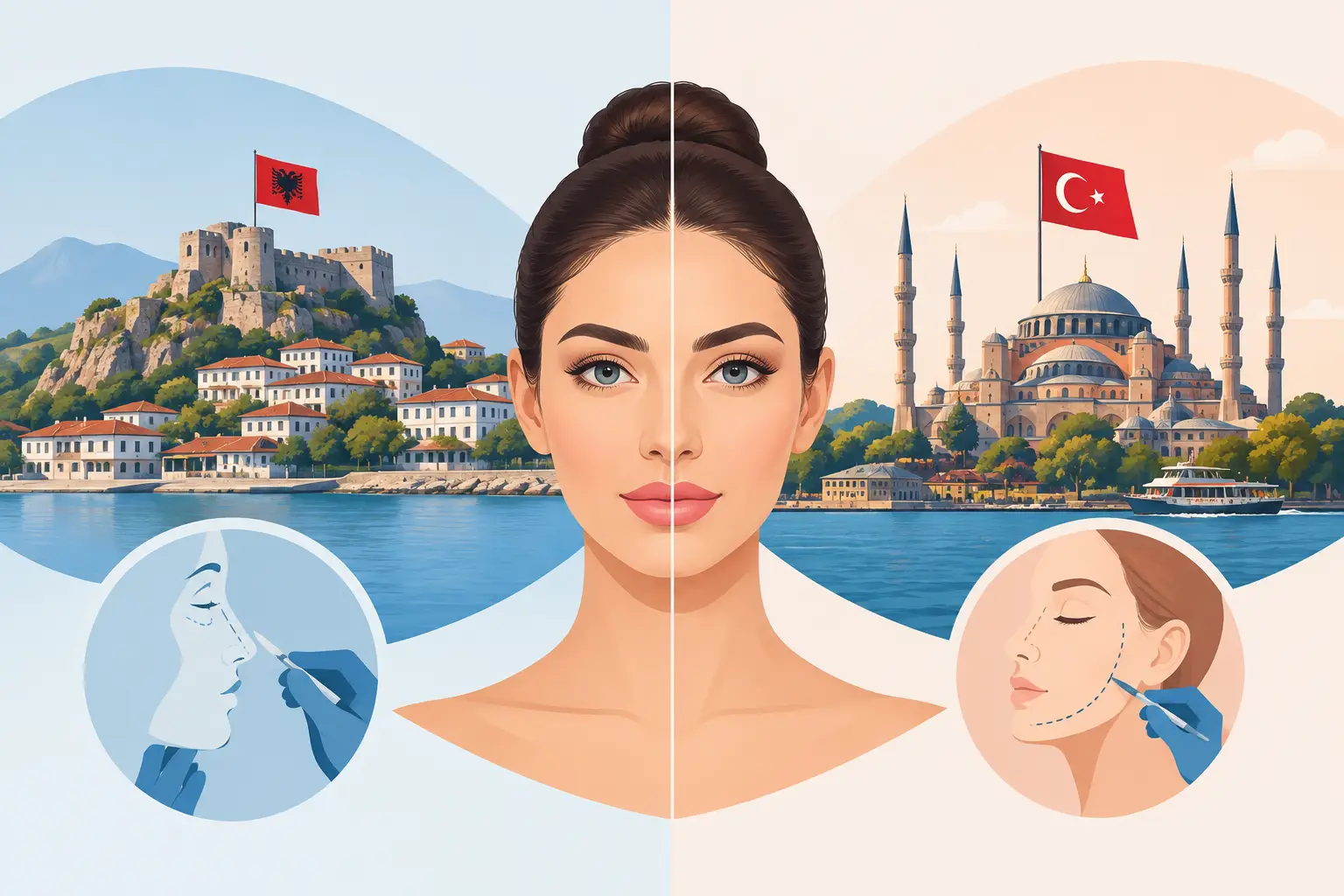
Albania versus Turkey plastic surgery is not simply a comparison of destinations or advertised package prices. It is a decision about who performs your procedure, where it is performed, how your recovery is managed, and whether the entire experience reflects the level of discretion and clinical oversight you expect.
For patients considering surgery abroad, Turkey is often the first destination that comes to mind because of its scale and global visibility. Albania is emerging as a more selective European alternative for patients who prioritize hospital-based care, personalized coordination, and Brazilian expertise in aesthetic surgery. The right choice depends on your procedure, risk profile, expectations, and willingness to look beyond an initial quote.
Albania Versus Turkey Plastic Surgery: The Essential Difference
Turkey has built a large international cosmetic surgery market. Its breadth can be an advantage: patients may find many clinics, surgeons, procedure options, and frequent departures from major cities. For a well-informed patient who can independently evaluate credentials and is comfortable navigating a high-volume market, that level of choice can be appealing.
Albania offers a different proposition. The market is smaller, which can support a more curated experience when care is organized around a hospital setting, a defined surgical team, and a clear postoperative plan. Tirana is also increasingly attractive to international patients seeking a European location without the intensity of a mass-market medical tourism environment.
Neither country is automatically safer or better because of its name. Quality is determined at the provider level. A premium decision begins with the surgeon’s qualifications, the standards of the operating facility, anesthesia protocols, emergency readiness, and the continuity of care after surgery.
Do Not Compare Surgery by Price Alone
A lower advertised price can be legitimate, especially in countries with different operating costs. But plastic surgery is not a standardized commodity. Two quotes for a breast augmentation, facelift, liposuction, or body contouring procedure may cover very different levels of planning, staffing, technology, implants, anesthesia, hospital use, accommodation, and follow-up.
When comparing Albania and Turkey, ask for an itemized explanation of what is included. Confirm whether the quote covers preoperative testing, surgeon fees, anesthesiologist fees, operating room time, implants or compression garments where applicable, medications, overnight monitoring, transfers, and postoperative reviews. If a revision becomes necessary, clarify how that is handled and which costs may apply.
The most economical option is not always the lowest number. It is the option that makes clinical sense, provides appropriate safeguards, and avoids preventable compromises in a procedure that will affect your body and confidence for years.
The hidden cost of compressed timelines
Some high-volume medical tourism models are designed around fast arrival, surgery, and departure. This may suit a straightforward case for a healthy patient, but it can create pressure on clinical evaluation and recovery time. Complex procedures, combined surgeries, substantial liposuction, facial surgery, or patients with relevant medical conditions may require a slower, more conservative plan.
A high-quality program should be willing to say that a procedure is not appropriate, that procedures should be staged, or that a patient should remain in the destination longer. Those recommendations may be less convenient, but they are often signs of responsible medical judgment.
Surgeon Expertise Should Lead the Decision
The aesthetic result depends heavily on surgical judgment. Before choosing any international provider, look beyond social media transformations and promotional claims. Review the surgeon’s formal training, professional registrations, experience in your specific procedure, and approach to complications and revisions.
For patients seeking refined body contouring, breast surgery, or facial rejuvenation, Brazilian plastic surgery expertise carries particular international relevance. Brazil has long been associated with advanced aesthetic sensibility, technical precision, and a deep understanding of proportion. Still, nationality alone is not a credential. Ask who will personally perform the essential steps of your surgery and who will be present throughout anesthesia and recovery.
At Dr. Hebert Lamblet American Hospitals, the model brings Brazilian surgical expertise into The American Hospital in Tirana, aligning aesthetic planning with a modern hospital environment and European standards of care. For the patient, that distinction matters: the surgical experience is designed around medical infrastructure rather than a transaction-driven clinic package.
Questions worth asking in every consultation
A serious consultation should give you direct, specific answers. Ask about the surgeon’s experience with your anatomy and goals, the technique recommended, expected scars, realistic recovery milestones, and the possibility of asymmetry or revision. Discuss medications, prior surgeries, smoking or nicotine exposure, weight stability, pregnancy plans, and any conditions that could affect healing.
You should also ask what happens if there is bleeding, infection, a reaction to anesthesia, or another unexpected event. The answer should identify the care pathway, not merely offer reassurance. Excellent providers do not promise a risk-free procedure. They demonstrate how risks are assessed and managed.
Hospital Standards and Anesthesia Matter More Than Location
A polished clinic reception or a five-star hotel does not replace an appropriately equipped surgical setting. For invasive procedures, the operating environment should be a central part of your comparison between Albania and Turkey.
Confirm where surgery will occur and whether the facility is licensed for the planned procedure. Ask about the anesthesia team, monitoring equipment, recovery area, overnight capabilities, blood management protocols, infection-control measures, and access to higher-level care if needed. Patients undergoing multiple procedures should be especially attentive to these details, since operative time and recovery demands can increase.
Hospital-based surgery may not be necessary for every treatment. Non-surgical aesthetic procedures have different requirements than a tummy tuck, extensive liposuction, breast revision, or facelift. The setting should match the complexity of the procedure and your individual health profile.
Recovery Support Is Where Destinations Separate
Surgery does not end when you leave the operating room. Swelling, discomfort, wound care, mobility restrictions, garments, medication schedules, and emotional adjustment all form part of the experience. International patients also need a realistic plan for the period between discharge and travel home.
Turkey’s large market can offer efficient logistics, but the level of individual follow-up varies significantly among providers. Albania may appeal to patients who prefer a more contained experience, especially when their surgeon, hospital team, accommodation coordination, and postoperative appointments are connected through one care pathway.
Before booking, understand who you will contact after hours, how many in-person follow-ups are planned before you fly, and how communication will continue once you return home. You should never assume a local physician will automatically take responsibility for postoperative care from a procedure performed abroad. Discuss this before traveling.
Allow recovery to guide your travel schedule
Do not book a return flight based solely on vacation days or the shortest package offered. Your ability to fly depends on the procedure, anesthesia, risk of blood clots, drain management, pain control, mobility, and your surgeon’s assessment. Compression, walking plans, hydration, and follow-up visits may all be part of a safe travel strategy.
Build flexibility into your itinerary. A premium medical journey includes enough time to recover with privacy and professional support, rather than treating recovery as an inconvenience between surgery and sightseeing.
Privacy, Pace, and the Patient Experience
For many international patients, discretion is not a luxury. It is part of the reason they travel. A destination should allow you to focus on recovery without feeling processed through a crowded system or exposed in a highly transactional environment.
Turkey may be ideal for patients who want abundant choice, familiar medical tourism infrastructure, and a fast-moving city experience. Albania can be compelling for those who value a less saturated destination, personalized attention, and the cultural appeal of receiving Brazilian-led aesthetic care in a European hospital setting.
This is not about choosing the quieter destination for its own sake. It is about selecting an environment that supports your state of mind, your recovery needs, and the level of service you expect. Some patients thrive with speed and convenience. Others want more time with their surgeon, more privacy, and a team that knows their case in detail.
How to Make the Right International Choice
Choose a provider only after a thorough virtual or in-person consultation, a review of your medical history, and a clear explanation of the proposed plan. Be cautious with guarantees, unusually broad promises, or pressure to commit before your questions are answered.
Compare the total clinical experience rather than destination headlines. A strong decision balances surgeon expertise, hospital standards, anesthesia safety, transparent pricing, recovery time, and ongoing access to your care team. If you are considering a transformative procedure, the quality of that decision deserves the same care as the procedure itself.
The best next step is a detailed consultation with a qualified surgeon who can assess your goals honestly, explain the trade-offs, and create a surgical plan that puts your health and result ahead of convenience.