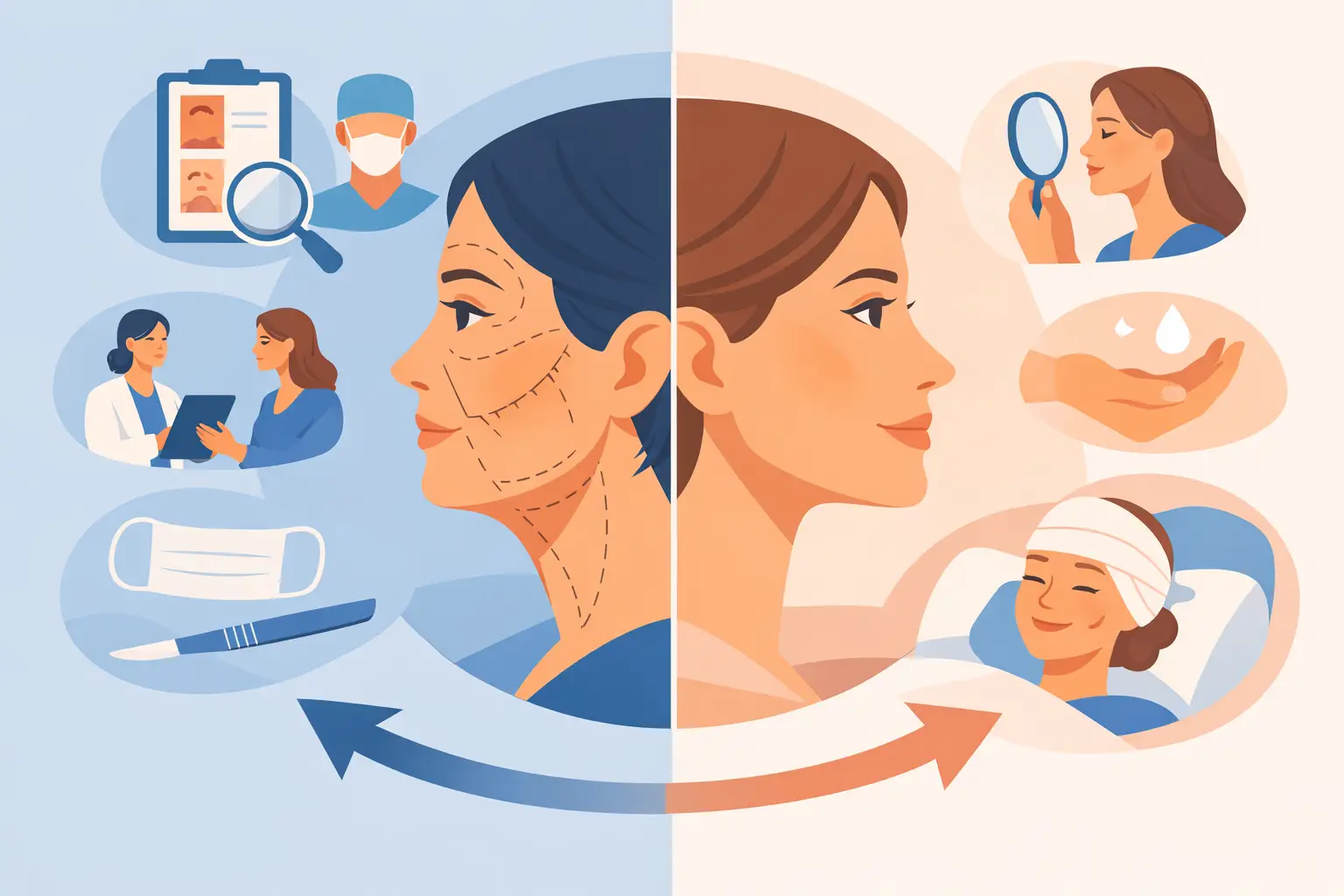
A refined result is not created in a single operating-room moment. The facelift before after patient journey begins long before surgery and continues well beyond the first time swelling fades. For patients seeking facial rejuvenation at an international standard, the most meaningful transformation is a carefully managed process: precise planning, advanced surgical judgment, discreet recovery, and the patience to let natural contours emerge.
A facelift can restore definition along the jawline, improve laxity through the lower face and neck, and create a more rested, harmonious appearance. It cannot, and should not, erase every expression line or make a person look like someone else. The highest standard of facial surgery is refinement that still looks unmistakably like you.
The Facelift Before After Patient Journey Starts With Consultation
The consultation is where an aesthetic wish becomes a clinical plan. A patient may arrive saying that they look tired, feel their face has begun to sag, or no longer recognize themselves in photographs. These concerns are valid, but they do not automatically point to one procedure. Facial aging is individual, shaped by skin quality, bone structure, fat distribution, muscle activity, genetics, weight changes, and sun exposure.
A thoughtful surgical assessment considers the face as a whole. Dr. Hebert Lamblet evaluates the degree of tissue descent, neck definition, skin elasticity, facial proportions, and the features that must be protected to preserve identity. The goal is not to pull skin tight. It is to reposition deeper structures with appropriate tension and balance.
This is also the time to discuss whether a facelift alone is the right choice. Some patients benefit from a neck lift, eyelid surgery, brow refinement, facial fat grafting, or non-surgical treatments. Others may be better served by a less invasive approach if skin laxity is limited. The right recommendation depends on anatomy and goals, not on a trend or a single image seen online.
Setting expectations with precision
Before-and-after photographs can be useful when reviewed responsibly. They show a surgeon’s aesthetic philosophy, incision placement, ability to maintain natural proportions, and experience across different facial types. They are not a promise that another patient will achieve the same result.
During consultation, patients should be able to speak openly about what they want to change and what they do not want to lose. A strong plan identifies both. For example, a patient may wish to improve jowling and neck laxity while preserving a soft smile, familiar cheek shape, and a face that continues to move naturally in conversation.
Medical history matters just as much as aesthetic preference. Smoking, certain medications, prior facial procedures, uncontrolled health conditions, and healing history can affect safety and recovery. A premium surgical experience is built on candid medical screening, not on shortcuts.
Surgery Day: Technique Meets Hospital Standards
On the day of surgery, preparation and environment matter. A facelift is a sophisticated procedure that requires a qualified surgical team, appropriate anesthesia care, modern operating facilities, and structured post-operative monitoring. For international patients, these details provide reassurance beyond the procedure itself.
The surgical approach varies. In many contemporary facelifts, the surgeon works beneath the skin to address the deeper muscular and connective layer often called the SMAS. This allows structural repositioning rather than relying only on skin removal. Depending on the patient, the neck may also be refined through contouring, muscle support, or treatment of deeper tissues.
Incisions are planned to be as discreet as anatomy permits, often around the ear and within the hairline. Their final appearance depends on surgical technique, individual healing, skin type, and diligent aftercare. The trade-off is straightforward: meaningful correction of significant laxity requires an operation designed to address it. Patients should be cautious of claims that promise surgical-level change without the recovery associated with surgery.
At Dr. Hebert Lamblet American Hospitals, Brazilian expertise is paired with European standards in a hospital setting designed for safety, privacy, and elevated patient care. This combination is particularly valuable for patients who expect world-class clinical infrastructure as well as a sophisticated aesthetic vision.
The First Days After a Facelift
The first stage of recovery is not the time to judge a result. Swelling, bruising, tightness, temporary numbness, and changes in facial expression are common parts of healing. The face may appear fuller than expected at first, especially around the cheeks and jawline. This is temporary, but it requires patience.
Post-operative instructions are individualized and may include guidance on head elevation, garment use, medication, wound care, showering, activity restrictions, and follow-up appointments. Patients should follow those instructions exactly rather than relying on generalized advice from social media or friends.
Discomfort is usually manageable with the prescribed plan, but recovery should never be minimized. A patient needs protected time away from work, social obligations, strenuous exercise, and travel that has not been cleared by the surgical team. For medical tourists, this means arranging an itinerary around recovery rather than treating surgery as one item in a packed vacation schedule.
Weeks two through six: the social recovery phase
Many patients feel ready to be seen in public after the early bruising has resolved and swelling has improved. That timing varies. Makeup may help conceal residual discoloration once approved by the surgeon, and hairstyles can temporarily camouflage incision areas as they heal.
At this stage, the face begins to look more familiar, but it is still evolving. Subtle swelling can persist, and areas of numbness may take time to improve. It is common for one side to settle slightly differently from the other during healing. These variations are usually assessed over time, not interpreted as a final outcome in the first few weeks.
Patients who value discretion often appreciate planning their recovery with the same care they bring to selecting a surgeon. A private, comfortable setting and reliable access to professional guidance can make the experience feel far more composed.
Months later: refinement becomes visible
The most elegant facelift results tend to reveal themselves gradually. Over several months, swelling resolves, tissues settle, scars mature, and the jawline and neck become more clearly defined. The final outcome is often softer and more natural than a patient expects during the first days after surgery.
This longer timeline can be emotionally useful to understand. A facelift is not an instant reveal. It is a controlled healing process, and the final photographs should be taken only when the face has had adequate time to settle. For many patients, that is when they notice the most meaningful change: they no longer look operated on. They simply look rested, stronger, and more aligned with how they feel.
How to Evaluate Facelift Before-and-After Results
When reviewing a facelift before after patient journey, look beyond the most dramatic image. The strongest outcomes preserve balance between the cheeks, jawline, neck, eyes, and mouth. The skin should not appear overly stretched, the earlobes should retain a natural shape, and the hairline should remain believable.
Lighting, facial expression, weight changes, makeup, and image angle can all affect photographs. A reputable practice uses consistent views and does not present imagery as a substitute for an individual examination. The question is not, “Can I get this exact face?” It is, “Does this surgical approach create results that feel natural, proportionate, and consistently well executed?”
It is equally wise to ask about scar care, follow-up protocols, expected downtime, possible complications, and the plan if recovery requires additional support. Premium care includes clear answers before a decision is made.
Planning an International Facelift With Confidence
Traveling for facial surgery can offer access to a highly credentialed team, advanced hospital infrastructure, and a more exclusive care experience. It also calls for extra preparation. Patients should allow sufficient time in the destination for in-person evaluation, surgery, early monitoring, and medical clearance before return travel.
Bring complete medical records, disclose all medications and supplements, and make practical arrangements for a companion or local support during early recovery when recommended. Your surgical team should provide a defined communication plan for the period after you return home. Distance should never mean uncertainty.
The right facelift journey is measured not by how dramatic the immediate after photo appears, but by the confidence a patient carries months later. When the decision, technique, recovery, and follow-up are handled with the same level of care, facial rejuvenation can feel less like a change of identity and more like a return to your own presence.