A beautiful breast enhancement does not always begin with an implant. Fat transfer breast enhancement uses carefully purified fat from areas such as the abdomen, flanks, thighs, or back to create a softer, more natural increase in breast volume. For the right patient, it can refine breast shape while improving body contour elsewhere – a sophisticated approach that rewards thoughtful planning rather than a one-size-fits-all solution.
The appeal is clear: your own tissue, no implant device, and a result designed to complement your proportions. Yet fat transfer is a surgical technique with real limits, variable fat survival, and specific safety requirements. The most elegant outcomes come from a detailed consultation, conservative volume planning, and a surgeon who understands both breast aesthetics and the science of fat grafting.
What Is Fat Transfer Breast Enhancement?
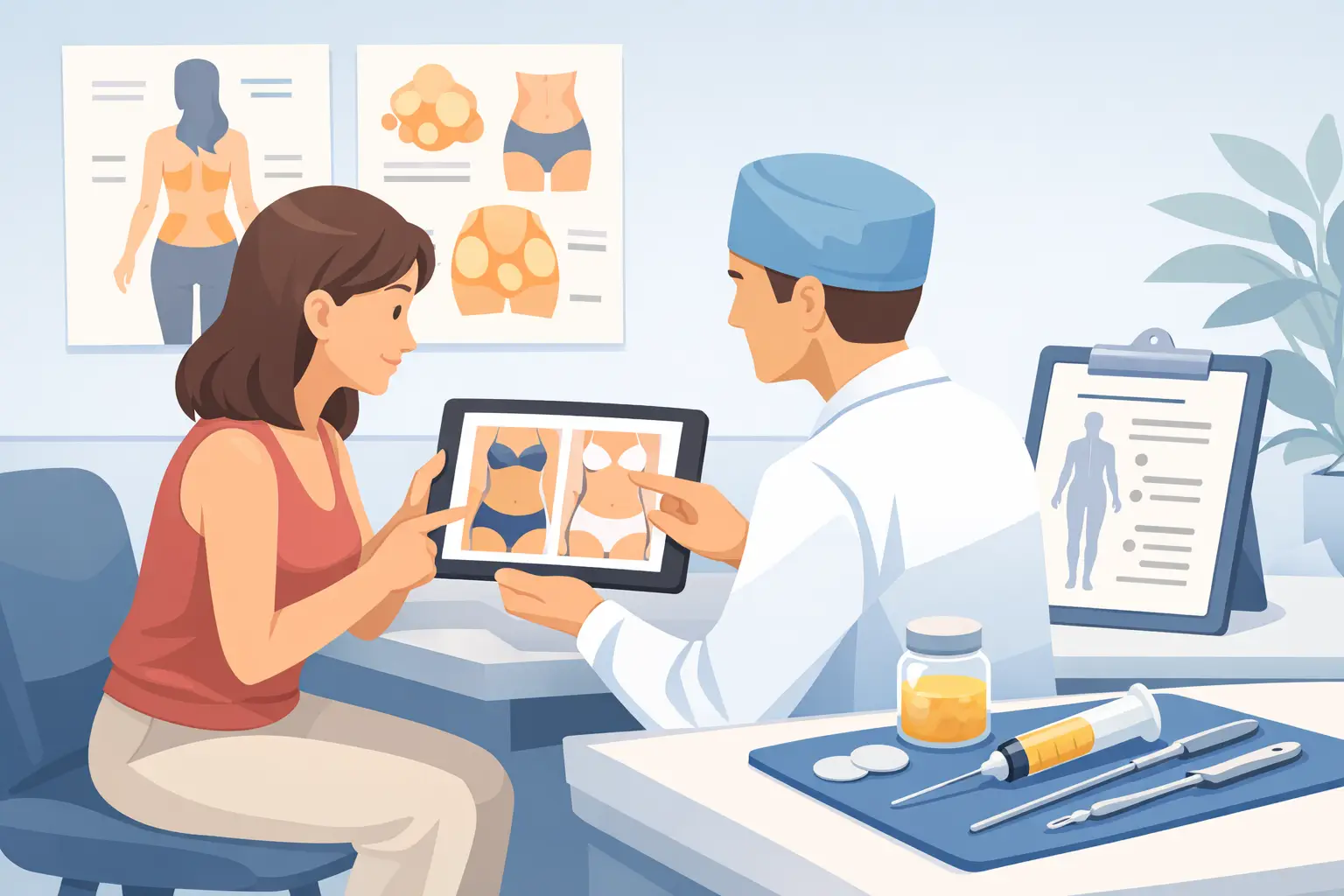
Also called autologous fat grafting, this procedure moves living fat cells from one part of the body to the breasts. It begins with gentle liposuction performed through small incisions in donor areas. The collected fat is then processed to separate viable fat cells from fluid, blood, and damaged tissue.
The surgeon places the purified fat in many small, carefully distributed layers throughout selected planes of the breast. This precise placement helps establish blood supply around the transferred cells, which is essential for long-term retention. It is not simply a matter of injecting volume. It is a technique of sculpting shape while respecting the biology of the tissue.
Some of the transferred fat is naturally reabsorbed during the healing process. The portion that successfully establishes a blood supply can become a lasting part of the breast. Because retention varies from patient to patient, the final result is assessed over several months, not in the first weeks after surgery.
The Look It Can Create
Fat grafting is especially valued for its soft feel and subtle integration with the body. It can improve mild asymmetry, restore fullness lost after pregnancy or weight change, soften the visible edges of an existing implant, and enhance cleavage or upper-pole contour in a measured way.
For patients who want a modest increase rather than a dramatic change in cup size, this can be an exceptionally refined option. The procedure tends to create a natural transition from the chest wall to the breast, avoiding an overly augmented appearance when that is not the patient’s aesthetic goal.
That said, fat transfer does not reliably deliver the same degree of enlargement as breast implants. A patient seeking a significant volume increase, pronounced upper-pole fullness, or a highly projected silhouette may be better served by implants, sometimes with fat grafting used as a complementary finishing technique. The right choice depends on anatomy, existing breast tissue, skin quality, and the result you want to see in clothing and without it.
Who Is a Strong Candidate?
The best candidates are generally healthy adults with realistic expectations and enough donor fat to harvest safely. A patient does not need to have a large amount of excess weight, but there must be sufficient fat available in areas that can be contoured without compromising the body’s balance.
Stable weight matters. Meaningful weight loss after surgery may reduce breast volume because the transferred fat behaves like fat elsewhere in the body. Likewise, substantial weight gain can affect the result. Patients should ideally be near a weight they can maintain comfortably over time.
Breast skin and tissue quality also influence what can be achieved in one session. A tight breast envelope may not accommodate a large amount of grafted fat safely. In these cases, an experienced surgeon may recommend a staged approach, allowing the tissues to adapt before a second transfer. This is not a compromise in quality – it is often the more responsible route to a graceful, durable result.
Smoking and nicotine use can interfere with circulation and healing. Patients are typically required to stop nicotine products well before and after surgery. Medical history, breast imaging, prior breast procedures, and family history are also part of a responsible preoperative assessment.
When Another Procedure May Be More Appropriate
Fat grafting cannot correct every breast concern on its own. Significant sagging may require a breast lift, as adding volume without lifting the breast can make a low breast appear heavier. Marked asymmetry, prior surgery, or tissue changes after pregnancy may call for an individualized combination of procedures.
For some patients, a hybrid breast augmentation offers the most balanced option. This approach combines an implant for dependable structural volume with fat grafting to soften transitions, refine cleavage, or correct subtle contour differences. A consultation should clarify the trade-offs openly, rather than presenting any single technique as universally superior.
The Procedure: Precision in Every Stage
Fat transfer breast surgery is usually performed under anesthesia in an accredited hospital environment. The first stage is liposuction, planned not only to obtain fat but also to improve the donor area’s contour. The amount removed is determined by what can be done safely and proportionately, not by a desire to maximize harvest.
After processing, the fat is reinjected through tiny access points using controlled micro-aliquots. Layering the graft in multiple directions supports even distribution and reduces the risk of concentrated collections. The surgeon continually evaluates symmetry, shape, and projection during the procedure.
This dual focus is one reason patients are drawn to the technique. The abdomen, waist, thighs, or back may look more defined while the breasts gain nuanced fullness. Still, liposuction is not a substitute for weight loss, and its purpose within this procedure is aesthetic contouring and fat harvest, not treatment of obesity.
Recovery and the Timeline for Final Results
Recovery involves caring for two surgical areas: the breasts and the liposuction donor sites. Most patients experience swelling, bruising, and tenderness, particularly where fat was harvested. Compression garments are commonly used for the donor areas, while the breasts require a different, gentler approach to avoid unnecessary pressure on the grafted tissue.
Walking begins early, but strenuous exercise, chest-focused training, and high-impact activity should wait until the surgeon confirms that healing is progressing appropriately. Many patients return to lighter daily routines within about one to two weeks, depending on the extent of liposuction and the nature of their work.
The breasts can initially look fuller than the eventual outcome because of swelling and the presence of fat that may not fully survive. As the body heals, volume settles. A more dependable sense of retention often emerges after three to six months. Photographs and measurements taken over time provide a much more accurate assessment than early postoperative impressions.
Safety, Screening, and Surgical Judgment
Breast fat grafting should be performed by a qualified plastic surgeon with a disciplined approach to patient selection, imaging, sterile technique, and follow-up. Like every surgical procedure, it carries risks, including bleeding, infection, contour irregularities at donor sites, asymmetry, fat necrosis, oil cysts, calcifications, and the possibility that less volume survives than expected.
Changes within breast tissue can appear on imaging, which is why patients should maintain routine breast health screening and tell radiology providers about their history of fat grafting. Modern breast imaging specialists are familiar with these postoperative findings, but clear documentation is valuable for future care.
Safety also depends on avoiding excessive volume in a single session. More is not necessarily better. Overfilling can compromise fat survival and work against the smooth, understated result many patients seek. Surgical maturity means knowing when a staged plan is preferable to forcing an ambitious outcome in one operation.
Planning an International Surgical Experience
For international patients, the quality of the clinical setting and the continuity of care deserve the same scrutiny as the procedure itself. A premium surgical journey should include a thorough remote evaluation when appropriate, transparent preoperative instructions, hospital-based treatment, and a recovery schedule that allows time for in-person follow-up before travel.
At Dr. Hebert Lamblet American Hospitals, Brazilian plastic surgery expertise is paired with The American Hospital’s modern infrastructure in Tirana, Albania. This combination is designed for patients seeking sophisticated aesthetic care, European standards, and a discreet international experience without treating the trip as an afterthought to surgery.
Travel plans must remain secondary to recovery. Patients should allow adequate time in the destination, follow mobility guidance, and receive explicit clearance from their surgical team before flying home. The most comfortable itinerary is one built around medical judgment, not an inflexible calendar.
A successful result should look considered rather than announced. If the goal is soft volume, improved proportion, and contour that feels authentically yours, a personalized consultation can determine whether fat transfer is the right expression of that goal – and whether one session, a staged plan, or another approach will serve you best.