A private operating suite may look elegant on a website, but safety is rarely decided by design alone. When patients ask, are hospital based cosmetic procedures safer, they are usually asking a more serious question: if something unexpected happens, who is there, what systems are in place, and how quickly can the team respond?
For patients considering aesthetic surgery, especially those traveling internationally, that question deserves a precise answer. The short version is yes, hospital-based cosmetic procedures are often safer in meaningful ways. But not automatically, and not for every case. Safety depends on the procedure, the patient’s health, the surgeon’s qualifications, the anesthesia plan, and the quality of the hospital itself.
Are Hospital-Based Cosmetic Procedures Safer in Practice?
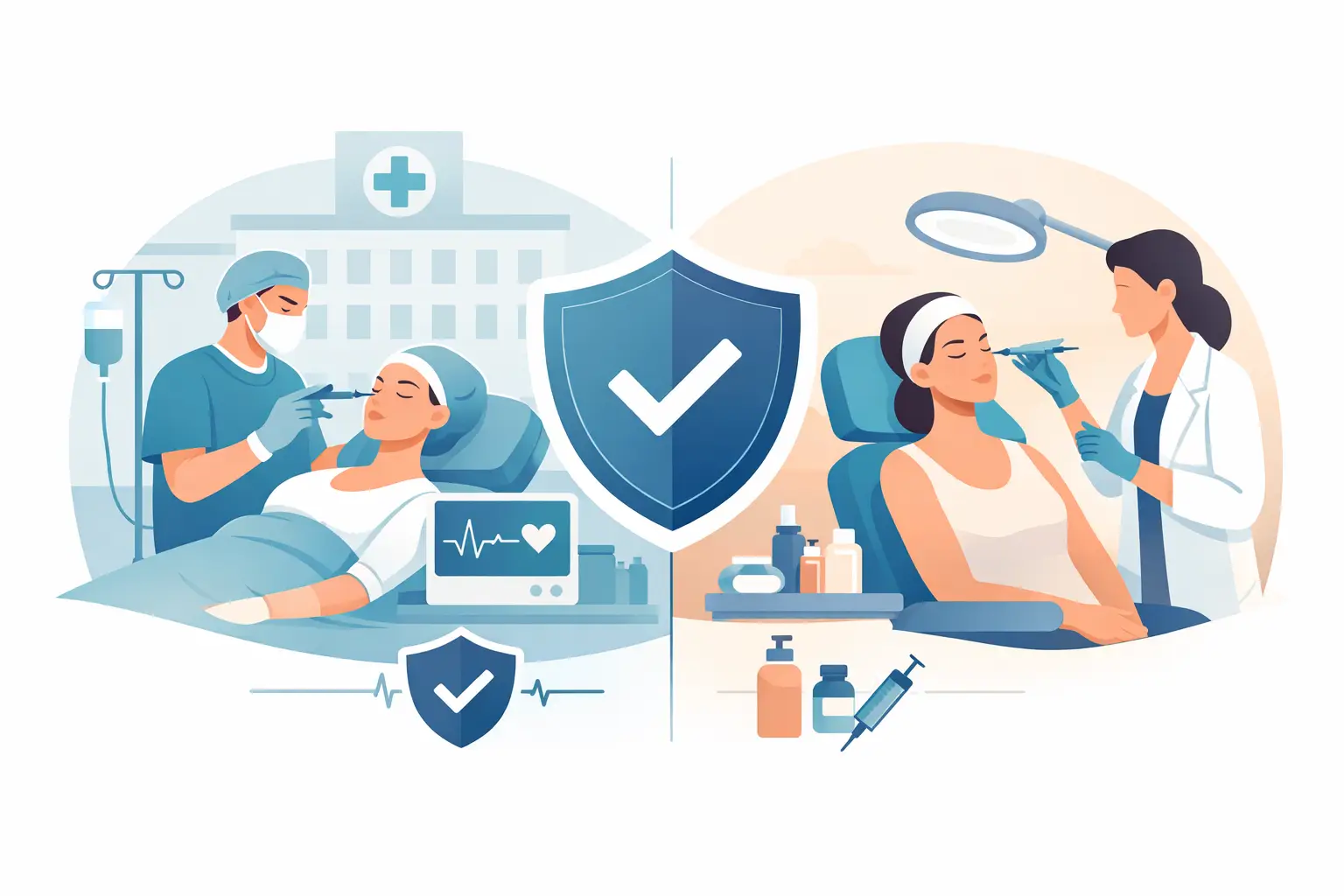
In practice, a hospital setting usually offers broader layers of protection than a small office-based facility or stand-alone surgical center. That matters most when a procedure is complex, anesthesia is deeper, operating time is longer, or the patient has medical risk factors that require closer monitoring.
A hospital typically brings together a full perioperative system rather than a single surgical room. There are established protocols for sterilization, infection control, medication handling, patient monitoring, and escalation of care. If a patient develops an unexpected reaction to anesthesia, abnormal bleeding, cardiac instability, or another complication, the response is usually faster and more coordinated because the necessary personnel and equipment are already on site.
That does not mean every office-based procedure is unsafe. Many minimally invasive treatments and select surgeries can be performed very safely outside a hospital when the case is appropriate and the standards are high. The real distinction is that a hospital is designed for complexity. Cosmetic surgery may be elective, but it is still real surgery.
What a Hospital Environment Changes
The strongest argument in favor of hospital-based care is not branding. It is infrastructure.
A well-equipped hospital has immediate access to advanced monitoring, emergency medication, diagnostic support, sterile processing systems, and multidisciplinary teams. If a patient needs input from internal medicine, cardiology, intensive care, or imaging, those resources are part of the same ecosystem. That level of readiness may never be needed, but safety is built on preparation for the exceptions, not just the routine.
Anesthesia is another major factor. Cosmetic procedures range from local anesthesia with light sedation to full general anesthesia. As the anesthesia plan becomes more involved, the value of a hospital setting often increases. Dedicated anesthesia professionals, recovery protocols, and post-anesthesia support can reduce risk and improve early detection if something is not progressing as expected.
For international patients, this matters even more. Traveling for surgery adds variables such as fatigue, language preferences, logistics, and compressed timelines. A hospital environment can help reduce friction by offering more structured preoperative testing, clearer postoperative observation, and stronger continuity of care.
The Situations Where Hospital-Based Care Matters Most
Some procedures benefit disproportionately from being performed in a hospital. Combined surgeries are one example. A breast procedure paired with liposuction, or a facial rejuvenation plan involving multiple techniques, can increase operative time and recovery demands. The longer and more involved the surgery, the more valuable it is to have deeper medical support available.
Patients with existing medical conditions also often benefit from hospital-based planning. High blood pressure, a history of clotting issues, diabetes, smoking history, elevated BMI, or previous surgical complications do not always prevent cosmetic surgery, but they do raise the importance of careful screening and perioperative management.
Revision surgery is another category where hospital infrastructure can be especially reassuring. Secondary procedures are often less predictable than primary cases. Scar tissue, altered anatomy, and more demanding technical decisions can increase complexity. In those cases, the setting is not a minor detail. It is part of the risk-management strategy.
Are Hospital Based Cosmetic Procedures Safer for Every Patient?
Not always in a simplistic sense. A healthy patient having a minor procedure under local anesthesia in a properly accredited surgical facility may not gain a dramatic safety advantage from a full hospital admission. In some cases, a focused outpatient environment can be efficient, comfortable, and entirely appropriate.
But the question should not be reduced to a binary answer. Safer compared to what, and for whom?
A hospital-based procedure may offer stronger safeguards, yet the best setting is still individualized. An excellent surgeon in a high-standard hospital is a very different proposition from a poorly selected team simply working inside a hospital building. The institution matters, but so do surgical judgment, case selection, and discipline in saying no when a patient is not an ideal candidate.
This is where experienced plastic surgeons distinguish themselves. They do not use the setting as a marketing label. They use it as one component of a broader safety philosophy that includes patient selection, technique, anesthesia planning, and responsible postoperative follow-up.
The Safety Signals Sophisticated Patients Should Look For
Patients who value world-class care should look beyond generic claims such as safe, advanced, or premium. The more useful questions are specific.
Ask where the procedure takes place and why that setting was chosen for your case. Ask who administers anesthesia, what monitoring is used, and what happens if overnight observation becomes necessary. Ask how the team evaluates medical history before surgery, how complications are handled, and who remains involved after discharge.
The quality of the hospital itself also deserves attention. Not all hospitals operate at the same standard, and not all cosmetic surgery programs within hospitals are equally rigorous. European standards, modern operating rooms, credentialed teams, and structured postoperative care all contribute to the real safety profile.
For patients traveling abroad, coordination is part of safety too. A premium experience should include more than the procedure itself. It should offer clear pre-op instructions, coherent surgical planning, professional recovery oversight, and realistic guidance about when it is safe to fly, return to work, or resume normal activity.
Why Reputation Alone Is Not Enough
A well-known surgeon can inspire confidence, and rightly so. Surgical reputation matters. But reputation without infrastructure leaves gaps, especially in procedures that require more than technical artistry.
The safest aesthetic outcomes usually come from a combination of factors: an experienced plastic surgeon, a qualified anesthesia team, a hospital-grade environment, disciplined protocols, and a patient whose procedure has been planned with restraint rather than sales pressure. Cosmetic surgery should never feel improvised.
This is one reason premium international patients increasingly prioritize hospital-based programs that combine Brazilian expertise with institutional support. The appeal is not only the result, but the standard behind the result. An elegant transformation feels very different when it is delivered within a system built for medical excellence.
At Dr. Hebert Lamblet American Hospitals, that combination is central to the patient journey – sophisticated aesthetic surgery guided by Brazilian surgical expertise within a modern hospital environment aligned with European standards.
The Trade-Offs Patients Should Understand
Hospital-based surgery can come with higher facility costs, more formal scheduling, and a process that feels more clinical than boutique. For some patients, that may seem less intimate than a private office setting.
But safety often involves choosing substance over atmosphere. A luxury experience and a hospital environment are not mutually exclusive. In fact, for discerning patients, the most reassuring form of exclusivity is access to serious medical infrastructure, not decorative comfort.
There is also a practical point. When complications are rare, patients sometimes underestimate their importance. Yet the value of a hospital is not measured by what happens when everything goes right. It is measured by what can be done immediately if something does not.
The Better Question to Ask Before Surgery
Instead of asking only, are hospital based cosmetic procedures safer, ask whether your specific procedure should be performed in a hospital and whether your surgeon has chosen that setting for the right reasons.
That framing leads to better decisions. It shifts attention from sales language to clinical reasoning. It encourages a more mature view of cosmetic surgery, one that respects both aesthetics and medicine.
For many patients, especially those undergoing more involved surgery or traveling for treatment, hospital-based care offers a meaningful safety advantage. Not because a hospital guarantees perfection, but because it provides depth – depth of monitoring, depth of expertise, depth of response.
And when you are making a decision that affects your appearance, your health, and your confidence, depth is exactly what you want around you.